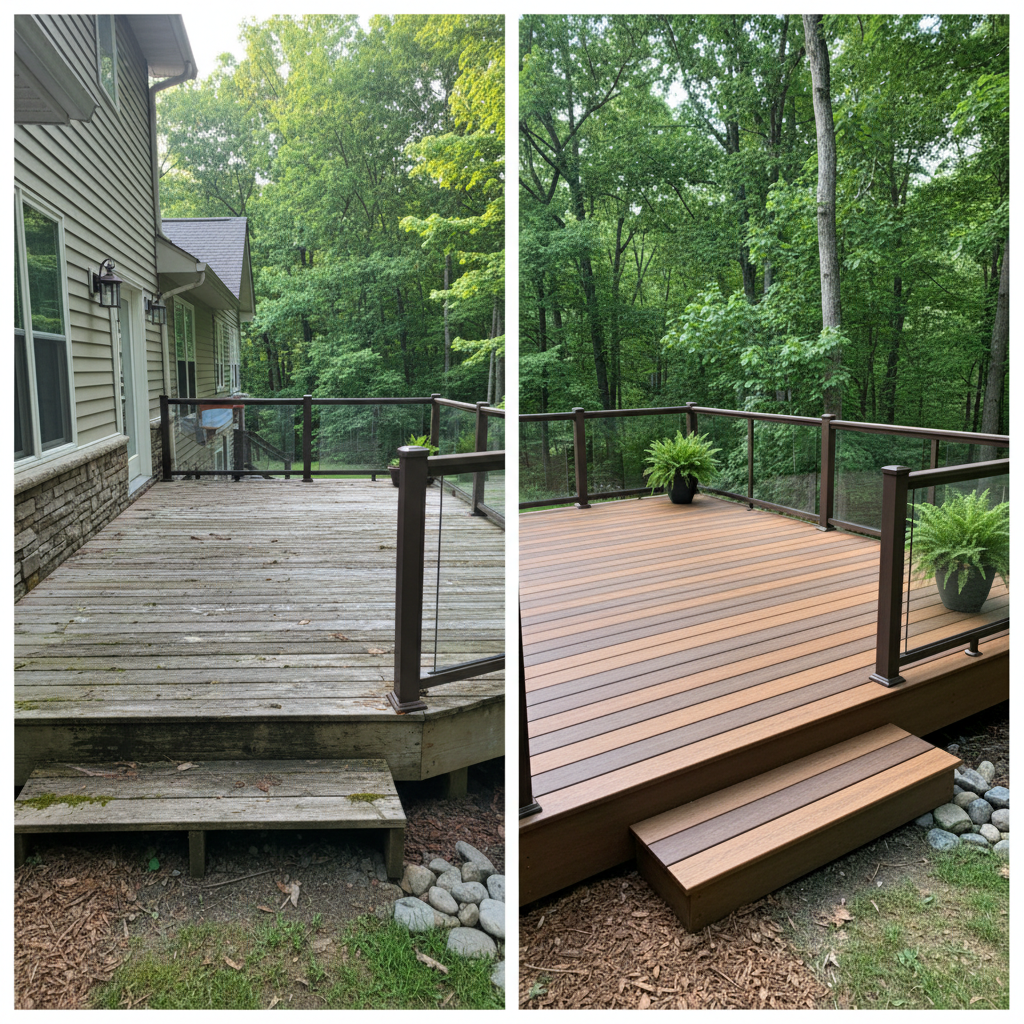
Thinking about a composite deck for your Manchester home? That's a smart move. You get fantastic durability and way less upkeep than wood. But once you decide on composite, you're faced with another choice: capped or uncapped? It’s a big one, and it affects everything from how much you pay upfront to how long your deck looks good.
What's the Deal with Uncapped Composite?
Alright, let's start with uncapped composite. This is basically the OG composite decking. It's a blend of wood fibers and recycled plastic, mixed together and extruded into boards. Think of it like a dense, solid block of material. It's still a huge step up from wood in terms of rot and insect resistance, and you don't have to stain or seal it every year.
The main thing to know about uncapped boards is that their surface is porous. Because of those wood fibers, they can absorb moisture and are more susceptible to mold and mildew if not cleaned regularly. They also tend to fade more over time, and they can scratch a bit easier than their capped cousins. You'll see this kind of decking offered at a lower price point, which is attractive, especially if you're on a tighter budget for a smaller deck or a rental property.
Enter Capped Composite Decking
Now, capped composite is where things really shine. Imagine that same wood-plastic core, but then it's wrapped on three or four sides with a durable, protective polymer shell. It's like a tough, invisible shield. This cap is usually made from a high-performance plastic that's engineered to resist just about anything Mother Nature can throw at it.
What does that cap do? A whole lot. It makes the board virtually impervious to moisture, so mold and mildew have a much harder time taking hold. It's incredibly fade-resistant, so your deck's color will stay vibrant for years, even with our hot, humid Connecticut summers and harsh winters. That cap also makes the surface much more resistant to scratches, scuffs, and even stains from spilled wine or BBQ sauce. Cleaning is usually just a quick wash with soap and water.
Cost: The Upfront Reality
Let's talk money, because that's always a factor. Uncapped composite is definitely the more budget-friendly option upfront. You're looking at a lower material cost per linear foot. If you're building a simple, small deck and cost is your absolute top priority, uncapped might seem appealing.
Capped composite, on the other hand, comes with a higher price tag. There's more technology and engineering in that protective cap, so you pay for it. But here’s where you need to think long-term. That higher upfront cost often translates to less maintenance, less cleaning, and a longer-lasting, better-looking deck. You're paying for peace of mind and less work down the road.
Durability & Maintenance in Manchester, CT
This is where the rubber meets the road, especially for us here in Manchester. We get all four seasons, and sometimes all in one week! We've got humid summers that love to encourage mold growth, and snowy, icy winters that can be tough on any outdoor surface. Plus, if your yard is like many around the Highland Park or North End areas, you might have some mature trees that drop leaves and create shade, which can also contribute to moisture issues.
Uncapped composite will hold up better than wood, no doubt. But it will require more frequent cleaning to prevent mold and mildew, and you'll likely see some fading over the years. You might also notice scratches more easily, especially if you have pets or move furniture around a lot.
Capped composite is built for this kind of abuse. That polymer shell is a game-changer. It shrugs off moisture, resists fading from the sun, and stands up to scratches much better. For a busy homeowner, the minimal maintenance of a capped deck is a huge win. You spend less time scrubbing and more time enjoying your outdoor space.
Appearance Over Time
When your deck is first installed, both options look great. But how will they look in five, ten, or even fifteen years? Uncapped composite will show its age more. The color will likely dull, and any mold or mildew not regularly cleaned will leave its mark. It still looks decent, but it won't have that fresh-from-the-factory look.
Capped composite maintains its appearance remarkably well. The colors stay vibrant, the surface resists stains, and it generally looks newer for much longer. The cap also allows for more realistic wood grain patterns and richer, multi-tonal colors, giving you more design flexibility and a higher-end aesthetic.
My Recommendation for Manchester Homeowners
Look, if you're asking me, and I've been building decks around here for years, I almost always steer folks towards capped composite decking. Yes, it costs more upfront. But for the conditions we deal with in Manchester – the humidity, the snow, the sun, the leaf litter – the long-term benefits of capped composite are just too significant to ignore.
You'll get a deck that looks fantastic for decades with minimal effort. You won't be spending your precious weekends scrubbing away mold or worrying about fading. It’s an investment that truly pays off in durability, beauty, and your own free time. When we build a deck at Manchester Deck Concepts, we want it to be something you're proud of for a very long time, and capped composite helps us deliver that every single time.