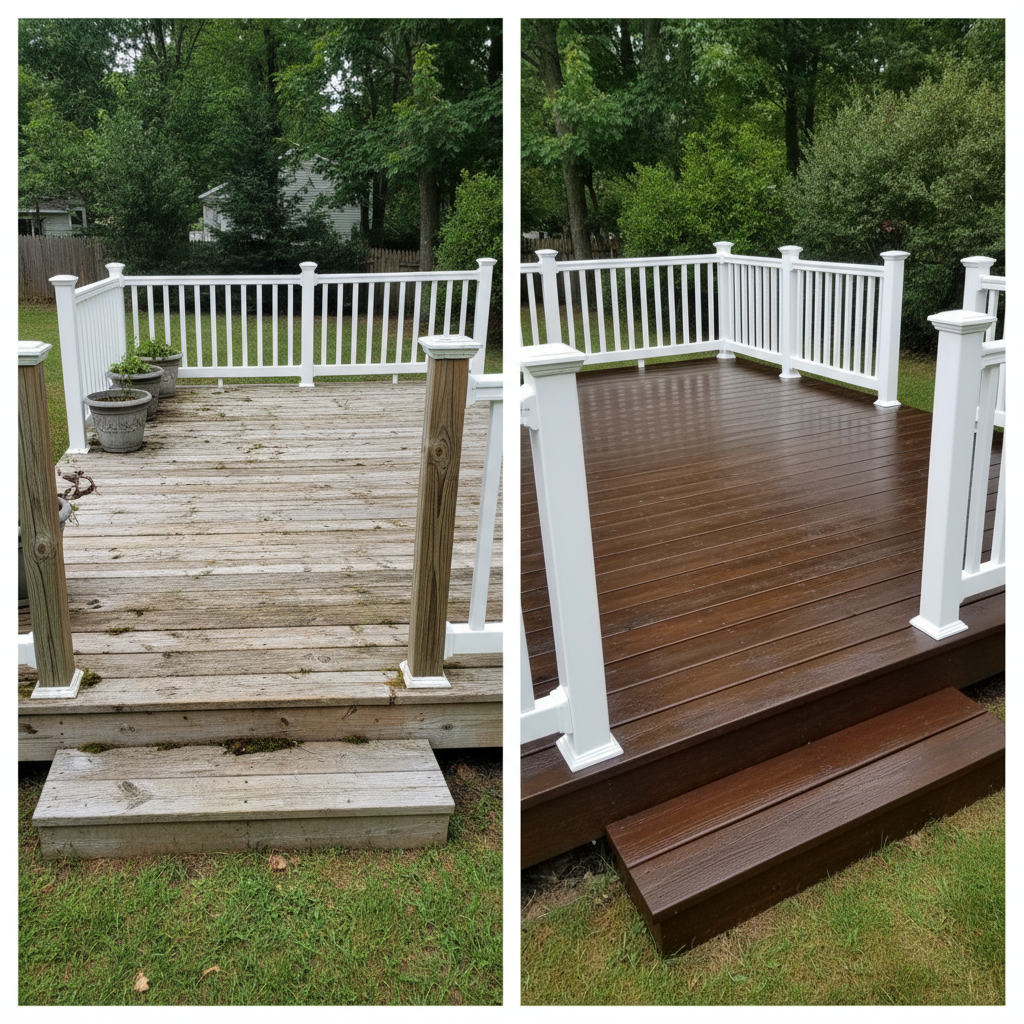
Alright, let's talk decks. Specifically, what you're going to put on top of that wood to protect it and make it look good. I get this question all the time from folks right here in Manchester: "Should I paint my deck or stain it?" It's not a simple answer, because both have their pros and cons, and what works for one person might be a headache for another. Let's break it down.
Deck Paint: The Full Cover-Up
When you paint a deck, you're essentially putting a solid, opaque layer over the wood. Think of it like painting the walls inside your house, but for your deck. It completely hides the wood grain, which can be a good thing if your deck is older, has some blemishes, or if you just want a uniform, solid color.
Appearance
Paint gives you a huge range of color options. You can go bold, match your house trim, or pick something totally different. It's a clean, consistent look. But remember, it covers everything. If you've got beautiful cedar or redwood, painting it means you'll never see that natural grain again.
Durability & Protection
Good quality deck paint offers a thick, protective layer against the elements. It's like a shield. It can stand up to our Manchester winters pretty well – the snow, the ice, the freeze-thaw cycles. It's excellent at blocking UV rays, which is a big deal for wood. The downside? Paint can chip, peel, and crack, especially on high-traffic areas or if the wood wasn't prepped perfectly. Once it starts peeling, it looks rough, and you're in for a much bigger prep job next time around.
Maintenance
This is where paint can be a bit of a beast. When it's time to re-do a painted deck, you often have to scrape, sand, and strip off all the old, peeling paint. It's a labor-intensive process, and if you skip steps, the new paint won't stick, and you'll be back to peeling in no time. You might get 3-5 years out of a good paint job before it needs serious attention, but those touch-ups can be a pain.
Deck Stain: Enhancing the Natural Beauty
Stain, on the other hand, is designed to penetrate the wood fibers, not just sit on top. It comes in various opacities, from clear to solid, and each offers a different level of protection and appearance.
Appearance
This is where stain shines for a lot of people. Even solid stains let some of the wood's texture show through. Semi-transparent and transparent stains enhance the natural grain and color of the wood, which is beautiful, especially on newer decks or those made of attractive wood species. You get that rich, natural look that paint just can't replicate.
Durability & Protection
Stain protects the wood by penetrating it, rather than forming a surface layer. It still offers good UV protection and helps repel water. It's less prone to peeling and chipping than paint because it doesn't form a film on the surface. Instead, it tends to fade and wear down over time. This is generally a better outcome than peeling paint, especially when you've got those harsh sun exposures in places like the more open, sunny backyards you see in parts of South Manchester.
Maintenance
This is usually where stain wins the maintenance battle. When it's time to re-stain, you typically just need to clean the deck thoroughly and then apply a new coat. You don't have the extensive scraping and stripping that often comes with paint. Depending on the type of stain and how much sun your deck gets, you might re-stain every 2-4 years for semi-transparent, or 5-7 years for a solid stain. It's a much simpler process.
Cost Considerations
Upfront, the cost of materials for paint versus stain can be pretty similar for comparable quality products. Where the cost really differs is in the labor, especially for re-application. Because paint often requires more intensive prep work (scraping, sanding, stripping), the labor costs for repainting can be significantly higher than for re-staining. If you're doing it yourself, that means more of your time, sweat, and effort.
My Recommendation for Manchester Homeowners
Given our climate here in Connecticut – the humid summers, the snowy winters, and the general wear and tear – I almost always lean towards stain for most decks. Here's why:
- Easier Maintenance: This is huge. Nobody wants to spend their entire spring scraping old paint. Stain fades gracefully, making reapplication much simpler.
- Better for Wood: Stain lets the wood breathe a bit more and penetrates to protect it from within. It's less likely to trap moisture, which can lead to rot down the line.
- Natural Look: Most people want their wood deck to look like wood. Stain lets that natural beauty shine through.
Now, there are exceptions. If your deck is really old, has mismatched wood, or you absolutely hate the look of wood grain and want a specific, solid color, then paint might be your only option to achieve that aesthetic. But be prepared for the maintenance commitment.
Ultimately, the best choice depends on what you value most: a completely uniform, solid color (paint) or easier maintenance and a more natural look (stain). If you're still on the fence, or if you've got a deck that's seen better days and you're not sure what's possible, give us a call at Manchester Deck Concepts. We can come take a look and give you an honest assessment of what'll work best for your specific situation.