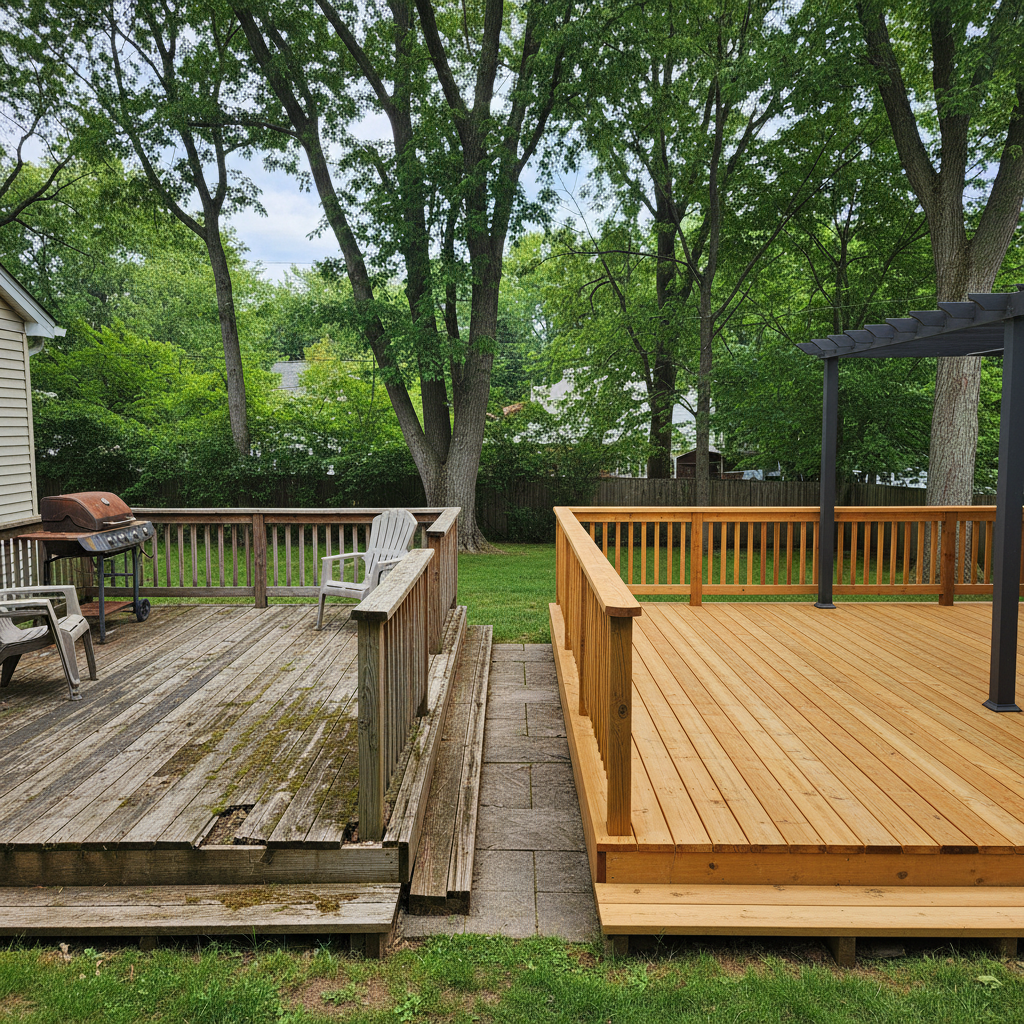
Alright, let's talk wood decks. So, you've decided against composite, you like how real wood looks and feels, and now you're looking at two main choices: pressure-treated lumber or cedar. Which one makes sense for your Manchester home? I see both come through my shop all the time, and honestly, each has its own place. Let's dig in.
Pressure-Treated Lumber: The Workhorse
This is probably what pops into your head first when you hear 'wooden deck.' Pressure-treated (PT) lumber is usually southern yellow pine that's been soaked with chemical preservatives under high pressure. This process makes it tough against rot, fungal decay, and bug infestations – which, let's be real, is a big deal here in Connecticut with our damp springs and those sometimes sticky, humid summers.
Cost
No question, PT is the most budget-friendly option right off the bat. You'll pay way less per linear foot for PT boards than you would for cedar. For a pretty standard 12x16 deck, the material cost difference alone could easily be thousands of dollars. If your budget's a bit tight, or you're planning a really big deck, PT often wins on price, hands down.
Durability & Longevity
A deck built well with PT, and looked after properly, can easily last 20-30 years, sometimes even longer. That treatment really does its job protecting against the elements. But, PT wood is known for warping, checking (those small cracks you see), and splitting as it dries out and weathers. It's just not as stable as cedar. I've seen plenty of PT decks in places like the Highland Park area that still look fantastic after years, but they definitely need consistent care, you know?
Maintenance
This is where some folks get a little tripped up. While PT is treated to resist rot, it's not invincible. You absolutely have to clean it every year and put on a good quality stain and sealant every 2-3 years. This shields the wood from UV damage, keeps moisture from soaking in, and helps stop that warping and cracking I just mentioned. If you skip this step, your deck will look weathered and worn out much, much faster.
Appearance
Fresh PT lumber often has a greenish tint from the treatment chemicals, but that fades over time to a grayish-brown. It takes stain well enough, but the grain isn't as rich or distinctive as cedar. It's a solid, functional look – definitely not what you'd call 'luxury.'
Cedar: The Natural Beauty
Western Red Cedar is a top-tier wood choice for decks, and there's a good reason for that. It naturally resists rot, decay, and insects because of the oils right inside the wood itself. No chemicals needed here, which is pretty neat.
Cost
Be ready to pay a premium for cedar. It's usually 2-3 times more expensive than pressure-treated lumber. This higher initial cost is the biggest hurdle for a lot of homeowners, but you're really paying for that natural beauty and its built-in resistance.
Durability & Longevity
Cedar is incredibly stable. It resists warping and checking way better than PT. It's also lighter and softer, which means it might get a few more dents and scratches than PT, but it holds up beautifully against rot and insects. A well-maintained cedar deck can easily last 20-25 years, often aging gracefully to a gorgeous silver-gray if you decide to leave it unstained.
Maintenance
Even though cedar is naturally resistant, it still needs protection from UV rays and moisture to keep looking its best and last as long as possible. You'll want to clean it annually and apply a high-quality UV-blocking sealant or stain every 3-4 years. If you love that silvery-gray patina, you can skip the stain, but a sealant will still really help protect the wood from moisture.
Appearance
This is where cedar truly shines, in my opinion. It has a stunning, rich reddish-brown color when it's new, with a distinctive, straight grain pattern. And the smell? Fantastic! It just offers a more refined, upscale vibe than PT. If you're aiming for a high-end look, cedar definitely delivers.
My Recommendation for Manchester Homeowners
So, which one should you pick? Look, both are good choices for a wooden deck. But if you ask me, for most homeowners in Manchester – especially with our sometimes brutal winters and humid summers – I tend to lean towards pressure-treated lumber, but with a big catch.
Here's why: The money you save upfront with PT is significant. That extra cash could let you put more into the deck's design, fancier railings, or even make it a bit bigger. With proper, consistent maintenance – and I really mean *consistent* – a PT deck will perform exceptionally well and last for decades. You just have to be willing to put in the work yourself or hire someone like us at Manchester Deck Concepts to do it for you. If you neglect a PT deck, it'll start showing its age pretty quickly.
Cedar is fantastic if your budget allows for it and you're really prioritizing that natural, premium look. It's a beautiful material, and it's a little more forgiving if you happen to miss a year of maintenance. But for sheer value and how well it stands up to our local weather, PT is hard to beat, as long as you commit to taking care of it. Think of it this way: a PT deck is like a reliable pickup truck – it gets the job done, it's tough, and with regular oil changes and tune-ups, it'll run forever. A cedar deck is more like a luxury SUV – beautiful, comfortable, but definitely comes with a higher price tag.
Ultimately, your choice boils down to your budget, what kind of look you prefer, and how much time you're willing to spend on maintenance. Either way, a new deck will be a fantastic addition to your home.